Building Strength and Flexibility with Vinyasa Practice
Vinyasa yoga is often described as a moving meditation: a continuous flow of postures linked with breath. Beyond its aesthetic grace, this style of practice is a powerful way to build both strength and flexibility—physically and mentally. Understanding how and why it works can help you practice more intelligently and sustainably.
At its core, vinyasa coordinates breath with movement. Each inhale and exhale is paired with a specific action or transition. This steady rhythm keeps you present, encourages smooth and controlled movement, and turns a sequence of poses into an integrated whole. Over time, that continuity develops stamina, muscular endurance, mobility, and focus.
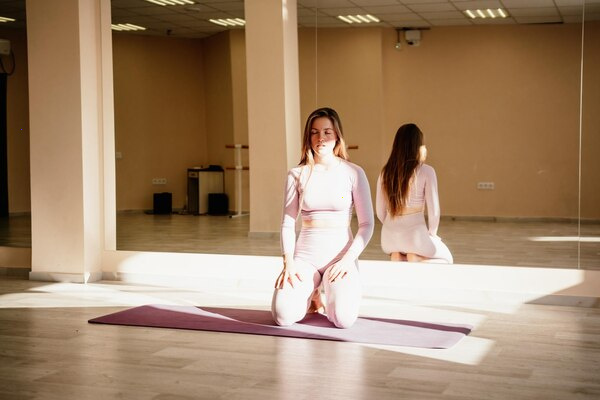
From a strength-building perspective, vinyasa relies largely on bodyweight resistance. Frequent transitions through Plank, Chaturanga, and upward-facing backbends develop upper-body and core strength. Holding standing postures like Warrior II, Side Angle, and balancing poses challenges the legs and stabilizing muscles. Because the flow is ongoing, muscles work not just for brief maximal efforts but for sustained periods. This improves endurance and teaches you to distribute effort efficiently rather than relying on brute force.
Equally important is the way vinyasa builds functional strength—strength you can use in daily life. Moving in and out of lunges, twists, and hip openers in multiple planes helps joint stability and coordination. The practice asks the body to support itself through shifting loads, angles, and relationships to gravity, which trains proprioception (your sense of where your body is in space). Over time, this can contribute to better balance, posture, and resilience against everyday strains.
Flexibility in vinyasa is developed dynamically. Instead of long, passive holds, you generally move in and out of stretches with the breath, or hold them for moderate durations. This type of stretching warms the tissues and invites the nervous system to gradually allow more range of motion without pushing into pain. Flowing through repeated sun salutations, forward folds, lunges, and gentle backbends gradually lengthens muscles and tissues around the hips, hamstrings, shoulders, and spine.
Because movement is continuous, the body stays warm, which is ideal for safely increasing flexibility. Yet flexibility in vinyasa is not only about the length of muscles; it also involves joint mobility and healthy movement patterns. Transitions that emphasize spinal articulation, controlled entry into binds, and mindful hip opening help refine how joints move, not just how far they move. The goal is easeful range of motion with stability, not extreme contortion.
Breath provides the bridge between strength and flexibility. As the intensity of a sequence rises, the temptation is to hold the breath and tense up. Learning to maintain smooth, even breathing while muscles are working and stretching teaches you to find steadiness in effort. On a physiological level, slow, regulated breathing can down-regulate stress responses, reducing unnecessary muscular tension and making it easier to move deeper into poses without force.
Intelligent sequencing is what makes vinyasa particularly effective. A skillful practice starts by warming the body and gradually layering complexity and effort. Early movements are often simpler and lower to the ground, preparing major muscle groups and joints. As the sequence progresses, you encounter more demanding standing poses, balances, and perhaps arm balances or backbends. Finally, the practice tapers down into cooling shapes and restorative postures. This arc allows you to access both strength and flexibility in a safer, more sustainable way, because tissues and the nervous system are progressively prepared rather than shocked.
Mindfulness plays a crucial role as well. Because you are asked to stay tuned into the breath and sensations, you develop a more refined awareness of your limits and edges. Strength then is not only about pushing harder; it becomes the capacity to engage muscles appropriately, to back off when needed, and to maintain alignment. Flexibility is not about chasing the deepest expression of a pose; it becomes the willingness to move honestly within your current range, trusting that consistency will expand it over time.
A balanced vinyasa practice also addresses imbalances that can undermine both strength and flexibility. Many people live with tight hip flexors, rounded shoulders, and weak posterior chains from long hours of sitting. Sequences that include hip openers, heart openers, twists, and poses that strengthen the back body can help counteract these patterns. By alternating between contracting and lengthening opposing muscle groups—like quadriceps and hamstrings, chest and upper back—vinyasa supports more harmonious alignment across the whole body.
To make the most of vinyasa for building strength and flexibility, consistency and progression matter more than intensity. A moderate, regular practice often yields better results than occasional, very demanding sessions. Starting with foundational flows allows you to refine alignment and build a stable base. Over time, you can explore more challenging variations and longer holds. Props and modifications are not signs of weakness but tools that let you access the intended benefits of a pose in a way that suits your body today.
Finally, the mental and emotional dimensions of strength and flexibility develop alongside the physical. Showing up for a flowing practice, staying present with discomfort without collapsing into it, and meeting each new sequence with curiosity cultivates resilience and adaptability. Just as your body learns to support you in a wider range of motion, your mind learns to remain steady amid change and challenge.
When approached with awareness and respect for your own limits, vinyasa practice becomes a holistic method for cultivating integrated strength and supple flexibility. It invites you to move with intention, breathe with purpose, and gradually expand what feels possible—on the mat and beyond it.