Restorative Evening Flows for Stress Relief
Evenings offer a powerful opportunity to reset your nervous system, release the day’s tension, and prepare your mind and body for deep rest. Restorative evening flows are not about sweating, pushing, or achieving; they’re about softening, slowing down, and signaling safety to your whole system.
Below is a gentle guide to restorative evening practices, why they work, and how to build a simple flow you can return to night after night.
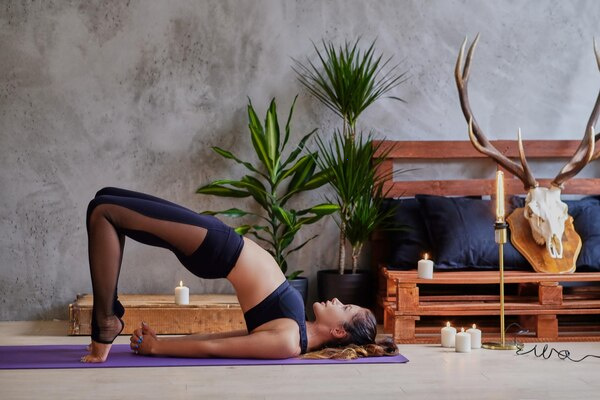
Why Evening Flows Help with Stress Relief
Modern stress keeps your nervous system stuck in “on” mode: elevated heart rate, shallow breathing, racing thoughts, and tight muscles. Restorative movement does the opposite. A well‑designed evening flow:
- Activates the parasympathetic nervous system (the “rest and digest” state).
- Lowers cortisol levels over time by reducing perceived stress.
- Loosens chronic tension in the neck, shoulders, lower back, and hips.
- Improves sleep quality, helping you fall asleep faster and wake more refreshed.
- Offers a healthy ritual for transitioning from work mode to rest mode.
Instead of jolting your system with screens, email, or intense workouts late at night, a calming flow gently guides your body into a slower rhythm.
Principles of a Restorative Evening Flow
You can design dozens of different routines as long as you follow a few principles:
- Slow, unhurried pacing
Move at half the speed you think you “should.” Linger in poses. Allow pauses between transitions.
- Low to the ground
Focus on seated, kneeling, and reclined postures. They feel inherently safer and more restful to the nervous system than standing, balancing, or strong weight‑bearing shapes.
- Gentle, non‑striving attitude
Aim for “comfortably supported stretch” rather than “deepest stretch possible.” If your jaw clenches or you hold your breath, you’ve gone too far.
- Emphasis on exhalation
Long, soft exhales help down‑regulate stress. Many breathing techniques in an evening flow will extend the exhale relative to the inhale.
- Use of props and support
Pillows, folded blankets, a couch, or a bed all count as props. The more supported you feel, the deeper your body can relax.
- Consistent sequence
Repeating a similar flow each evening teaches your body that these movements are a cue: “It’s time to wind down now.”
Setting the Scene for Your Evening Practice
How you prepare the environment matters almost as much as which poses you choose.
- Lighting: Dim lights or use a warm‑tone lamp. Avoid overhead bright white light if possible.
- Temperature: Keep the room slightly warm; the body cools down as you relax.
- Noise: Minimize loud, sharp sounds. Soft background music or white noise is optional.
- Devices: Put your phone on “Do Not Disturb” and place it out of reach. Reducing blue light and notifications is part of the stress‑relief process.
- Surface: A yoga mat, carpet, or even your bed can work. The softer and more inviting, the better.
A few minutes of intentional setup can make the entire practice feel more nourishing.
A Gentle 20–30 Minute Restorative Evening Flow
Move through the following sequence at your own pace. Stay 1–3 minutes in each pose (or longer if it feels good), breathing slowly and evenly. If anything causes sharp pain, skip or modify the shape.
1. Arrival and Grounding (2–3 minutes)
- Sit or lie down comfortably.
- Close your eyes or soften your gaze.
- Place one hand on your chest and one on your belly.
- Breathe in through the nose for a count of 4, out for a count of 6 or 8.
Do this for 8–10 breaths.
Focus on feeling the weight of your body supported by the floor or bed. Imagine the day exhaling out of you, little by little.
2. Cat–Cow Variations (3–4 minutes)
- Come to hands and knees (or do a seated version if on a bed or chair).
- Inhale: arch the spine gently, chest forward, tailbone lifting (Cow).
- Exhale: round the spine, belly to spine, chin toward chest (Cat).
Move slowly, synchronizing breath and motion. This sequence lubricates the spine and releases accumulated tension without overstimulation.
To make it more restorative:
- Keep your movements small.
- Close your eyes.
- Imagine you’re moving through warm water, with no sharp edges or effort.
3. Child’s Pose (3–5 minutes)
- From hands and knees, sink your hips back toward your heels.
- Knees can be together or apart.
- Rest your forehead on the mat, a pillow, or stacked fists.
- Arms can extend forward or rest alongside your body.
This posture gently flexes the spine, opens the lower back, and creates a feeling of being held and protected. Let your breath widen into the back of your ribs.
If your hips don’t reach your heels, place a pillow or folded blanket between them for support.
4. Gentle Seated Side Bends and Twists (4–6 minutes)
Sit on a cushion or folded blanket for comfort.
Side Bends:
- Inhale: reach one arm overhead.
- Exhale: gently lean to the opposite side, keeping the chest open.
- Hold for 5–8 slow breaths, then switch sides.
Seated Twists:
- Inhale: sit tall, lengthening the spine.
- Exhale: twist gently to one side, placing your opposite hand on the knee and the other hand behind you for light support.
- Keep the twist soft, focusing more on elongation than depth.
- Stay 5–8 slow breaths on each side.
Side bends and twists wring out residual tension in the torso and ribs, improving the sense of spaciousness around the heart and lungs.
5. Reclined Figure‑Four or Gentle Hip Release (4–6 minutes)
Lie on your back.
- Place your right ankle over your left thigh, just above the knee (like making a “4” shape).
- Option to:
- Keep the left foot on the floor, or
- Draw the left knee toward your chest, holding behind the thigh or shin.
Stay for 8–10 slow breaths, then switch sides.
The hips store a surprising amount of emotional and physical tension. This pose opens them in a supported, non‑aggressive way, soothing the lower back and calming the body.
If figure‑four is uncomfortable:
- Place both feet wider than hip‑width apart on the floor and let the knees fall inward to touch. Rest like this instead.
6. Supported Heart Opener (3–5 minutes)
Use a firm pillow, rolled blanket, or stacked towels.
- Place the support horizontally under your upper back, around bra‑line level.
- Lie back so your chest opens gently and your head rests either on the same support or another pillow.
- Arms can fall out to the sides, palms up, in a comfortable “cactus” shape or more relaxed by your sides.
Stay for 3–5 minutes with slow breathing.
This posture opens the chest after a day of hunching over screens, and can emotionally feel like “unarmoring” after holding yourself together all day. If it feels too intense, reduce the height of the support.
7. Legs Up the Wall or Elevated Legs (5–10 minutes)
This is one of the most soothing evening postures.
- Sit sideways with one hip close to a wall or headboard.
- Gently swing your legs up so they rest on the wall while your back comes down to the floor or bed.
- Adjust distance: if hamstrings feel tight, move farther from the wall so the knees can bend slightly.
If you don’t have wall space:
- Rest your lower legs on a couch, ottoman, or stack of pillows.
Close your eyes and breathe naturally. Notice the heaviness draining down from your feet and legs. This inversion helps with circulation, swelling, and overall nervous system calm.
8. Final Rest (Savasana‑Style) with Relaxation Scan (5–10 minutes)
Finish by lying flat on your back, or on your side if that’s more comfortable. Place a pillow under your knees or between your legs if you like.
Do a slow body scan:
- Bring awareness to your feet. On an exhale, invite them to soften.
- Move up: calves, knees, thighs, hips, belly, lower back, chest, shoulders, arms, hands, neck, jaw, eyes, forehead.
- At each stop, mentally say: “Relax” or “Soften” as you breathe out.
Allow yourself to do nothing. No fixing, no improving, no “doing this right.” Just rest.
If you tend to fall asleep here, that’s fine—this flow is designed to be sleep‑friendly.
Breathing Techniques to Deepen Stress Relief
You can layer simple breathwork into your flow or practice it as a separate 3–5 minute ritual:
- Extended Exhale Breathing
- Inhale through the nose for a count of 4.
- Exhale through the nose or mouth for a count of 6–8.
This lengthened exhale naturally activates the relaxation response.
- Box Breathing (for mental calm)
- Inhale 4 counts, hold 4, exhale 4, hold empty 4.
Keep it gentle; if holds feel stressful, skip them and just lengthen exhalations.
- Inhale 4 counts, hold 4, exhale 4, hold empty 4.
- Sighing Out the Mouth
- Inhale through the nose.
- Exhale with a soft, audible sigh through the mouth, like a slow “haaa.”
This can be surprisingly effective at releasing emotional tension.
Choose what feels most natural, and keep the breath smooth—not forced or dramatic.
Building Your Own Evening Flow Ritual
You don’t need to follow the exact sequence above every night. Use it as a template and experiment:
- If you have 10 minutes: Choose 2–3 poses (for example, Child’s Pose, Figure‑Four, Legs Up the Wall).
- If you feel wired and anxious: Emphasize longer holds and extended exhale breathing.
- If you feel heavy or emotionally drained: Include more gentle movement (Cat–Cow, side bends) before the longer holds.
Aim to practice at roughly the same time each evening. Over a few weeks, your nervous system will start to anticipate this routine and begin to unwind even sooner.
Gentle Guidelines for a Sustainable Practice
- No pain, no pushing. Restorative work is not about stretching to your limit.
- Stay warm. Use socks, a blanket, or a sweater—being cold keeps your body on alert.
- Allow emotion. Yawning, sighing, even unexpected tears are signs that your system is releasing held stress.
- Be consistent, not perfect. Three quiet minutes most nights is better than a 45‑minute session once a month.
Used regularly, restorative evening flows become more than just “some stretches before bed.” They turn into a quiet, dependable ritual of self‑regulation—one that helps your body remember what it feels like to be safe, soft, and deeply at ease.